

Poetry in a Glass: The Vitkin Winemaking Revolution
Updated: Mar 10
By Elizabeth Kratz
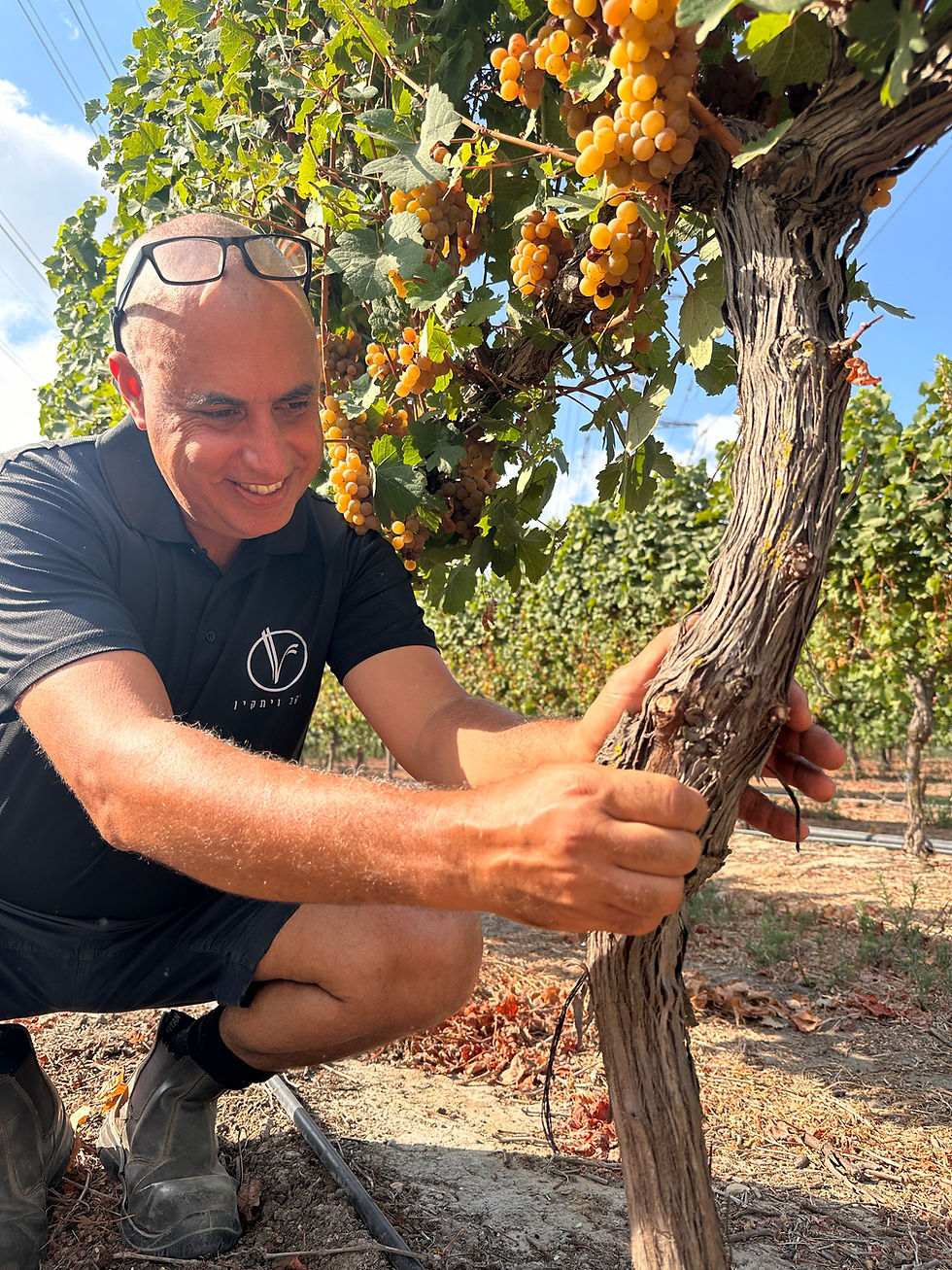
Before one can address what is likely the most consistently excellent, well-priced winery in Israel, it’s important to understand what was in Israel before Vitkin Winery. There have been a few revolutions in fine Israeli wine, the first of which was started by Baron Edmond de Rothschild in the 1880s, in which he sought to bring quality French-style grape growing to Israeli vineyards. The second revolution, that of a dramatic increase in quality and ageability of bottled Israeli wine, started 100 years later by Golan Heights Winery in the 1980s. Many wineries in Israel joined that revolution in the ensuing two decades, including Domaine du Castel, Tzora, Recanati and others.

A third revolution, which we might call ABC—Anything but Cabernet— celebrates wines that grow well in Israel’s unique eastern Mediterranean terroir and could also be called LWC for “local wine style,” and was started by Assaf Paz at Vitkin Winery. The winery was founded in 2001 and went fully kosher with its 2015 vintage. It was started as a family business by Paz with his sister and brother-in-law, Sharona and Doron Belogolovsky. Doron is descended from the founders of Kfar Vitkin, who arrived in the region as family farmers in 1932.
I was lucky enough to visit Vitkin Winery in January and spend time with Paz and his wife, Talia, hearing his story in the tasting room and learning to understand his vision of wine in the Mediterranean region. Working first as a pastry chef and studying food engineering in Israel, Paz turned his attention to French winemaking and was the first Israeli to do graduate study in Bordeaux, France, where he earned a high diploma, aka “Diplome National D’Oenologue.” He then worked at the famed Château Pontet Canet in Bordeaux and in California and Australia. On his return to Israel, Paz worked for Tishbi, Carmel, Binyamina and Segal.


While he keeps an experimental vineyard just outside of the tasting room at Kfar Vitkin, Paz most often makes wines with carignan, pinot noir, petite sirah, grenache and cabernet franc. The wines are expressive, well-structured and low-alcohol, which suits Israel’s hot climate. The whites are often made with refreshing crunchy and juicy grapes like grenache blanc, riesling and gewürztraminer; and so far, Vitkin is the only producer of the Spanish grape macabeo in Israel. Notably, Paz was the first winemaker to make a fine wine from the carignan grape—a workhorse that was in earlier decades considered bland and used in sacramental wines with added sugar—though his winery was not certified kosher at the time. It was 10 years later when Recanati and others began making kosher high-quality carignan. But Paz shook this off, noting that he was flattered by the imitation, even though his offerings were not certified kosher at the time and had therefore been less well-known to Israeli wine enthusiasts. Oscar Wilde would of course have agreed with him, having famously said, “Imitation is the sincerest form of flattery that mediocrity can pay to greatness.”

After choosing the right grapes for the climate, Paz’s first priority is that his wines are delicious. “Sometimes wineries are falling into their own traps of facade and being the best in terms of medals. No, wine is for enjoyment. Never forget my most important phrase in my winemaking: “יין ישמח לבב אנוש; Wine gladdens the heart of man,” he said, a reference to Psalm 104.

In Israel, Paz argues, international French varietals or as he calls them, “the fantastic four” —cabernet sauvignon, merlot, chardonnay and sauvignon blanc—might be a bit too modern for the hot terroir. “You need to go a little further back from the French varietals. Wine is something that connects to the ground, but it also connects people.”
“It’s not only that we held ourselves back from making cabernet sauvignon and merlot because everyone is making them,” he continued. “We made the varieties that in our opinion are most suitable to grow in our climate. And the ones that we can make delicious wines out of, like carignan, grenache and petite sirah. It turns out those varieties were the most notorious ones, so [initially] all the wine lovers didn’t even want to try them.”

But Vitkin had an ingenious plan; it priced wines well and even its entry-level wine blend, the “Israeli Journey” wines made in white, red and rosé (the rosé is not exported to the U.S.), were excellent and punched high above their price points. These $30 blends are consistently excellent and well-balanced, showing off the best that Israel has to offer. The introduction of Red Israeli Journey to the public induced customers to try Paz’s single-variety reds such as old vine carignan and cabernet franc, which are excellent. The rest, as they say, is history.

In the last several years, Paz has been writing poetry with grenache blanc and grenache noir as his pen. “I have a certain style but I am also going through an evolution,” he said. Vitkin Galia Grenache Blanc 2023 ($45), released to the U.S. market as a proprietary blend for Michael Solomanov’s Zahav restaurant, personally chosen by sommelier Steven McAllister in Philadelphia, is now available in select markets in the U.S., including New Jersey, New York, Florida and California. In fact, tasting this wine stopped me in my tracks last year when I first sampled it. It is composed primarily of grenache blanc from the Upper Galilee with 10% macabeo. It was aged in 500-liter French oak barrels for six months. This elegant, complex wine with lemon, blossom and hints of crunchy stone fruit aromas show well against subtle vanilla and spice flavors from the oak barrels. It seems to bring a breezy summer day into a glass.

The blanc has been followed by Vitkin Galia Dry Red Grenache 2021 ($45) this year. This is low-alcohol for a red wine at 13.5% alcohol and was made from dry-farmed grenache bush vines and aged for 10 months in oak barrels. It has notes of berry, cherry and raspberry with restrained tannins and natural acidity. Both Galia wines are complex and nuanced, yet light and exceedingly drinkable.

Another personal favorite is the Vitkin Cabernet Franc ($45); I have enjoyed every vintage of this, according to my notes, since 2017. It has aromas of bing cherries, berry, green pepper, mint and vanilla, as well as great texture and a lustrous, balanced finish. Priced at $45, this is an incredible wine for the price and truly a triumph and tribute to the land of Israel.

Contrary to the cab franc of which I am very familiar, I tried Vitkin’s flagship wine, the Vitkin Shorashim 2018, at the winery for the first time. This $150 wine, which is named for Vitkin’s shorashim (roots and ancestry), is made with a blend that changes annually but is often based on old vine carignan and petite sirah. It is highly complex, eminently balanced and has deep, dark aromas of black fruit combined with leather, subtle menthol and spice. “Vitkin Shorashim is a unique wine, produced only in exceptional vintages, matured more than 26 months in new French oak barrels and released from the winery after additional aging of four to five years in the bottle,” Paz explained.

Above all, Paz remains true to his vision and true to his goals as a winemaker. “At the beginning maybe I wanted to prove my philosophy and prove my methods, so perhaps the wines were a little more bold and expressive, but with time and experience and even my self-confidence, I am much more relaxed. It’s a lot like siyata d’shmaya [trust in God]; I managed to bring myself to a style that is expressive, not too heavy, not too jammy, not too much extraction. The quality of Israel but in a very elegant and delicious package.”

From the old vine carignan to Galia to the Israel Journey selections, the wines of Vitkin are delicious, affordable and pair well with the foods typical of the region and the warm weather. “I didn’t realize we are doing much more than making wine. But really, we were starting a revolution. Here we are standing in the cradle of civilization, the birthplace of the monotheistic religions, but also wine production.”
Try Vitkin’s wines, which are available wherever fine kosher wines are sold. “Please visit the beautiful and hospitable Vitkin winery’s cellar door for a wine tasting but also delicious, kosher local, fresh dishes when you are next in Israel,” Paz suggested. Learn more at https://vitkin-winery.co.il/en/.


Comments