

New Wines to Explore This Year
By Kenneth Friedman
One exciting aspect of enjoying wine is the ability to taste continuously evolving offerings. Year to year, even the wines from a single winery can differ from their predecessors due to yearly environmental influences and the winemaker’s oversight and decisions. Wine is organic and offers a canvas upon which the winemaker has infinite possibilities for artistry.
Among new wines gracing American shores, we find international delights and novel regional productions sure to tickle the fancy of the seasoned wine connoisseur. While wine is ancient and classic it allows for infinite possibilities of style. As the kosher world blossoms, we continue to be delighted by a wave of singular new wines.
Celebrity-Backed Wines

There are a host of celebrity-backed wines that have entered the market in recent years, a sign that the kosher wine world has arrived and is notable. Wines are now being produced kosher with celebrity backing including former NBA star and Orthodox Jew Amare Stoudemire, with wines made both in California and Israel; fashion designer Vera Wang, with prosecco from Italy and rosé from France; Washington State cabernet sauvignon from former NFL quarterback Drew Bledsoe’s Doubleback Winery; and others.

Another such famous name to now be associated with kosher wine is Isiah Thomas, the NBA legend, who is proudly involved in Cheurlin Champagne, a French producer with nearly 250 years and nine generations of tradition. Based in Champagne’s southern Aube region, the winery grows three of the treasured grapes of Champagne: chardonnay, pinot blanc and pinot noir. Cheurlin has released two new kosher wines with the Cheurlin Thomas Célébrité ($93, OU-P) and the Cheurlin Thomas Brut Spéciale ($66, OU-P). The former is a blend of 60% chardonnay and 40% pinot blanc and is zero dosage, meaning no sugar is added to the wine; and the latter is 70% pinot noir and 30% chardonnay, and is made with low dosage. The Célébrité shows great minerality and the Spéciale features great citrus and apple.
Israel's Unique Terrior

An exciting development in the expansion of kosher wine in the world is the ability to buy wines from unique terroirs and appellations. Israel itself boasts tremendous variation in climate, geography and soil composition, allowing for a wide variety of wine profiles. Comprising much of Israel’s south territory, the Negev soil allows little natural growth. Still, the Negev is an ancient winemaking area that was barren for centuries until recent developments in Israeli modern agricultural techniques and the
blossoming of the wine industry brought the terroirdriven region back to life. Today, approximately 260 hectares of the Negev are planted with vines, with about 20 wineries operating in the area.


Pinto Winery was founded in 2020 by the wellknown Pinto family to symbolize the family’s “long-term commitment to the Negev Desert and to the town of Yeruham.” The family planted the Yeruham Vineyard on Wadi Shualim (Hebrew for foxes) and hired the inventive Ya’acov Oryah as its chief winemaker. The Negev has the ability to create wines unlike others being produced in Israel today and the Pinto family has spared no expense to bring this vision to reality. The Pinto Wadi Shualim Red Blend, 2023 is a blend of 27% grenache, 18% merlot, 16% syrah, 13% petite sirah, 13% petit verdot and 13% malbec. An interesting blend, I’d say, but not for the innovative Oryah.
Specialty Wines from Italy
From Fia Family Farms, a Piedmont family-run group of wineries in Italy and France, come new

wines under the Naviante Winery & Vineyards label. Enologist Flaviana Fia is the first woman in the family to head the fifth-generation winery founded by her ancestor Maurizio Fia. She learned the trade early in her life, inspired by the strength and resolve of her mother. Naviante’s vineyards lie in Langhe, below the Naviante Hill where the Tanaro River curves, leaving a dry, lush location perfect for producing Piedmont’s famous barbera, dolcetto and nebbiolo. Two new wines are the Naviante Barolo DOCG, 2019; and the Naviante Langhe, DOC Nebbiolo, 2021.

Langhe Nebbiolo is considered “baby barolo,” mimicking many of the prized characteristics of its famed sibling but without many of the stricter regulations governing barolo and barbaresco. Langhe Nebbiolo production resulted from frustrated winemakers who wanted to declassify barolo and barbaresco DOCG wines, expand beyond these tight boundaries, utilize other indigenous grapes or different techniques for their wines, and allow for “second” wines. While barolo and barbaresco can take years to age and become approachable, Langhe Nebbiolo is generally softer and more accessible immediately. The Naviante Barolo is one of the few barolos available on the kosher marketplace (soon to be joined by the Luzzatto Barolo DOCG, 2019) and are noted for their potential to age for many years. Barolo is named for the village in Piedmont and is also made entirely from the traditional grape of nebbiolo before extensive

oak aging. It is widely considered the greatest of Italian wines, and with its richness and power it often needs many years to even become approachable.
New Alsatian Whites


Alsace is a greatly heralded wine region which for centuries has seen the struggle over sovereignty between France and Germany. While today the region is in northeastern France, the land is still dually Franco-German in culture. Yet kosher
offerings have been glaringly lacking from Alsace. On the horizon are three new Alsatian wines from Cave Du Bollenberg: a riesling, Sylvaner and gewürztraminer, each dry and each priced at $39. Alsace, as a wine region and destination, is spectacular in beauty, nestled between the heights of the Vosges Mountains and the Rhine River, France’s border with Germany. The mountains protect the vineyards on the slopes from westerly winds and create a phenomenon of a “rain shadow effect,” whereby the leeward side receives little rain due to the moisture being pulled upslope and its ensuing rain falling on the windward side of the elevation. Cedev/Noble Wines has carefully chosen the Bollenberg Mountain, a distinctive area that enjoys exceptional sunshine and is the tallest of the five limestone elevations in Rouffach, a commune in Alsace.
A New Sweet Wine from Loupiac

Cedev will also release a new wine from the Loupiac Château Dauphiné-Rondillon, a wine that has been served on the table of the French president for nearly 75 years. This is perhaps the first kosher Loupiac available to consumers. The sweet white wine appellation of Loupiac sits across the Garonne River in Bordeaux from its more famous sibling region of Sauternes. Like Sauternes, Loupiac’s wines are created from harvesting its grapes late and from the development of the fungus botrytis, aka noble rot, which helps to concentrate the grape’s natural sugars and characteristic flavor profile. Loupiac features the perfect conditions for botrytis, displaying luscious fruit with brilliant acidity. Its addition to the kosher wine world is highly anticipated. Château Dauphiné- Rondillon is an eighth-generation family winery headed by siblings Sandrine Darriet-Froléon and Jean-Christophe Darriet.
Château de Galilee


Château de Galilee is led by founder and longtime Israeli sommelier, Yossi Ben Udis, who grew up in the Galilee with the dream of one day opening a winery featuring wines from the Jewish homeland. Ben Udis is a longtime veteran of the Israeli wine scene, both as a sommelier and as a restaurateur, owner of Hatraklin Meat & Wine Bistro in Tel Aviv. His original love was horseback riding and he would pay for lessons by working for a local winery. Ben Udis would then find a new love, attracted to the siren song of wine. Years later he would found Château de Galilee, establishing his passion for the world-class wines of northern Israel. New to the United States are four of these wines: Cabernet Sauvignon 2024 ($29), Merlot 2024 ($29), Malbec 2024 ($29), and a semi-dry White 2024 ($26). Each wine is mevushal and eminently affordable, perfect for wide availability in restaurants and catered affairs. The grapes are born in the Upper Galilee, hand-harvested from the Ben Zimra and Alma Vineyards.

Israel's North and Portugal
A very interesting wine is the Dalton Asufa Paradisia Muscat of Alexandria, 2024 ($25), which is skin-macerated for seven months, creating an orange wine with character and depth. The Asufa series is the “playground” of Dalton’s winemaker, Guy Eshel, limited production wines allowing Eshel to explore various uncommon varieties and winemaking techniques. Muscat of Alexandria is normally vinified as a sweet wine but this is made dry. The nose is incredibly aromatic, with tropical notes and beautiful honeysuckle while also showing salinity and minerality.

From Portugal comes the Reccua Godin DOC Douro Reserva, Red Blend, 2022 ($33), a red blend of 35% touriga nacional, 35% tinto roriz, 30% touriga franco, aged 12 months in 500-liter Portuguese oak. This is another example of an exciting new wine from an underrepresented region in Douro, Portugal. These grapes might not be
familiar to the typical American wine drinker, but are classic in Portugal. They are the very same grapes used to make Douro’s famous port wines and this wine comes from Reccua, the wellregarded Portuguese winery. Tinto Roriz is another name for tempranillo, a more familiar grape that is the most popular varietal of Portugal’s neighbor, Spain. While Portugal has a very warm climate, Douro is shielded by a mountainous region and sits on the Douro River. The Godin Reserva is a very affordable wine that drinks as a more expensive one, with more depth and structure, clocking in just above $30.
Agur Winery
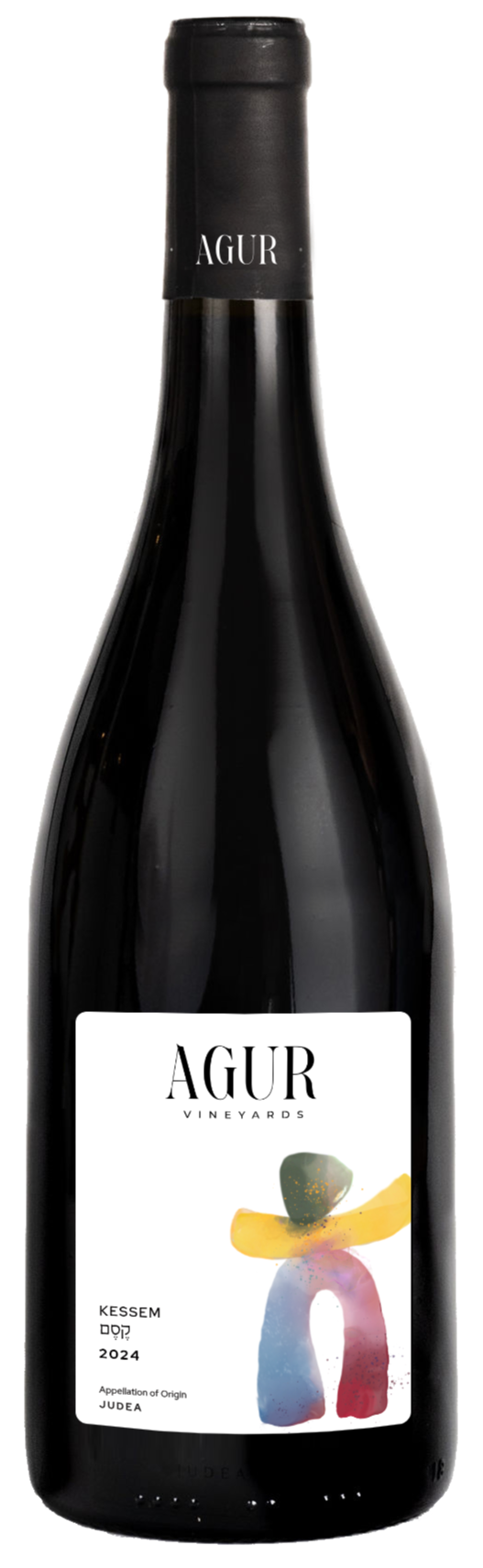


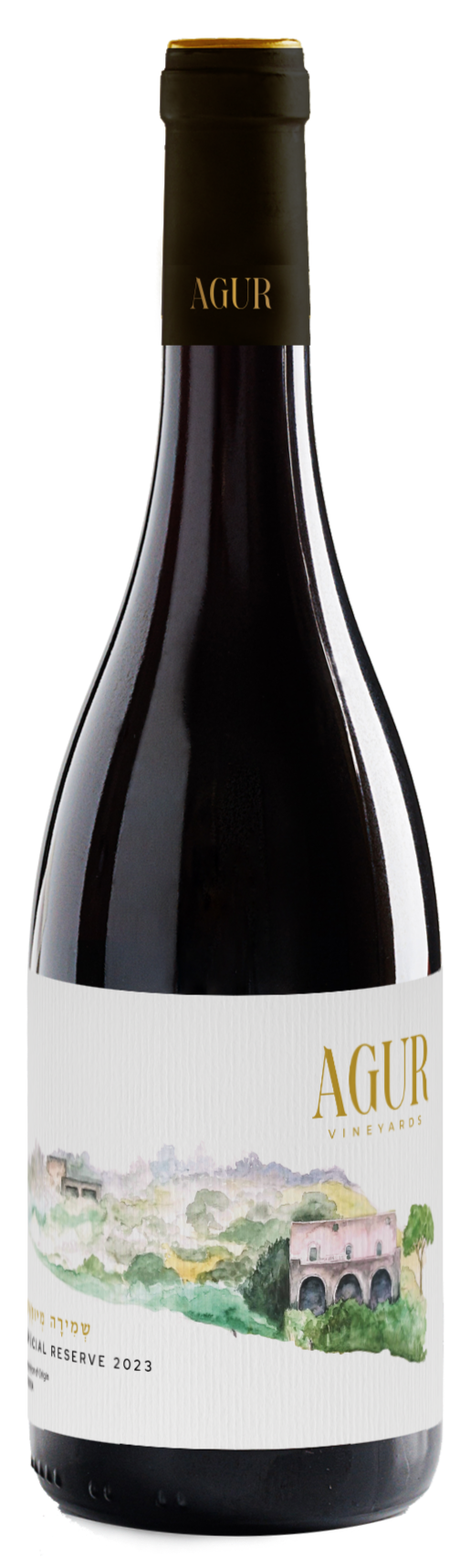
Agur Winery of Israel’s Elah Valley has seen wonderful reviews of their fresh, drinkable wines. Coming to our shores from Red Garden Importers and receiving wider distribution is Agur Kessem, 2024, Agur Blanc 2024, Agur Layam 2023, Agur Layam Blanc 2024, and Agur Special Reserve 2023. Established by Shuki Yashuv in 1999, the winery has taken flight under the guidance of new partners, Elad Katz and Eyal Drory, showcasing vibrant wines for the modern palate. As someone who has followed Agur for many years, I find this news very exciting.


Comments